
Recovering from the Crash Out as a Professor
Creating a practice to care for yourself in your toughest moments

Let’s be honest—sometimes we have to crash out. I’m not going to pretend all things professorship are roses and butterflies because that is simply not true. Some days, everything feels like a challenge. Maybe the students are being extra, administration is piling on the pressure, or life is just lifing.
While we may experience these difficulties temporarily, what matters most is our recovery. How do we tend to ourselves after the crash out?
I realized I wasn’t bouncing back well from tough days, especially after critical feedback, a heavy grading load (of below-expectation work, no less), or just the general stress of academia. As an anxious girly, I tend to ruminate and spiral into negative self-talk which is not great for my well being.
To help regulate myself, I developed a menu of practices to help me bounce back from the crash out. Depending on how deep the crash out is, how much time I have, where I am, and my energy levels I pick from this menu of items to best support myself. I’ve found having this predetermined menu/protocol takes away my decision fatigue around what to do in order to recover. It’s something that I just keep in the notes section of my phone that I have pinned at the top for quick and easy access.
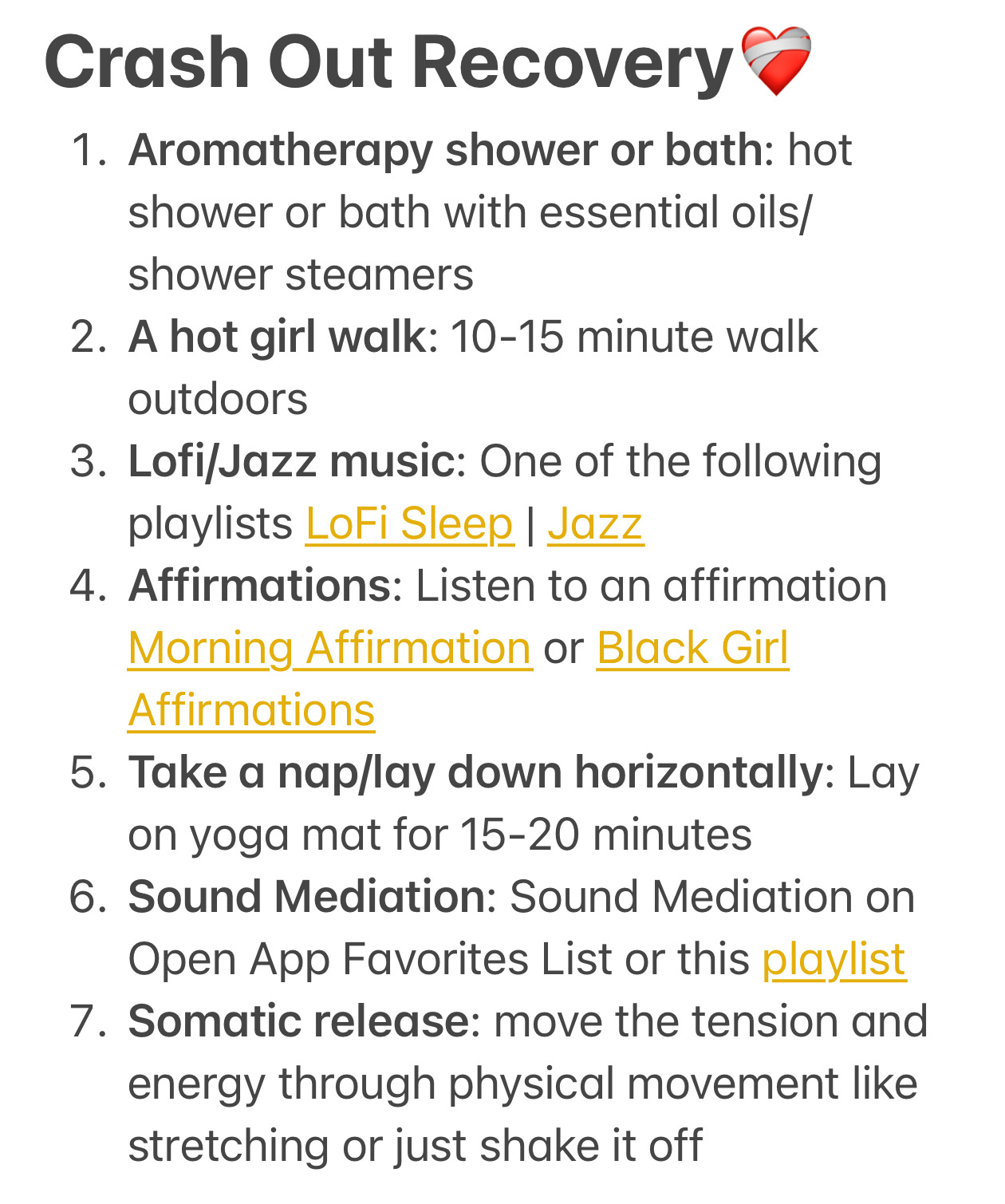
If you don’t have a recovery menu yet, here are some reflection questions to help you start cultivating one:
What activities help you feel calm and grounded when you're feeling overwhelmed?
How do you typically recharge after a tough day?
What sounds, scents, or environments help you relax and reset?
What small actions bring you comfort or joy, even on your hardest days?
How do you like to connect with your body when you're feeling stressed or tense?
What’s one thing you’ve done in the past that helped you bounce back from a challenge?
If you had 5 minutes, 15 minutes, or an hour to care for yourself, what would you do with that time?
Use these questions as a guide to start building your own recovery menu. It doesn’t have to be perfect—start with what feels good, and let it grow as you discover what works best for you.
As faculty, our work can be emotionally and mentally demanding. We’re guiding students, navigating institutional expectations, and balancing our own lives all at once. Building resilience through intentional recovery practices is essential—not just for ourselves, but for the students and colleagues we support.
Remember, you are more than your toughest days. Recovery is always within reach, and you deserve the care and attention you give to others.
Leave a comment below of what your recovery practice is!
Your Faculty Homegirl,
Kristin